Sign In
Password
Forgot password?
New to ShopGlobal? Sign Up
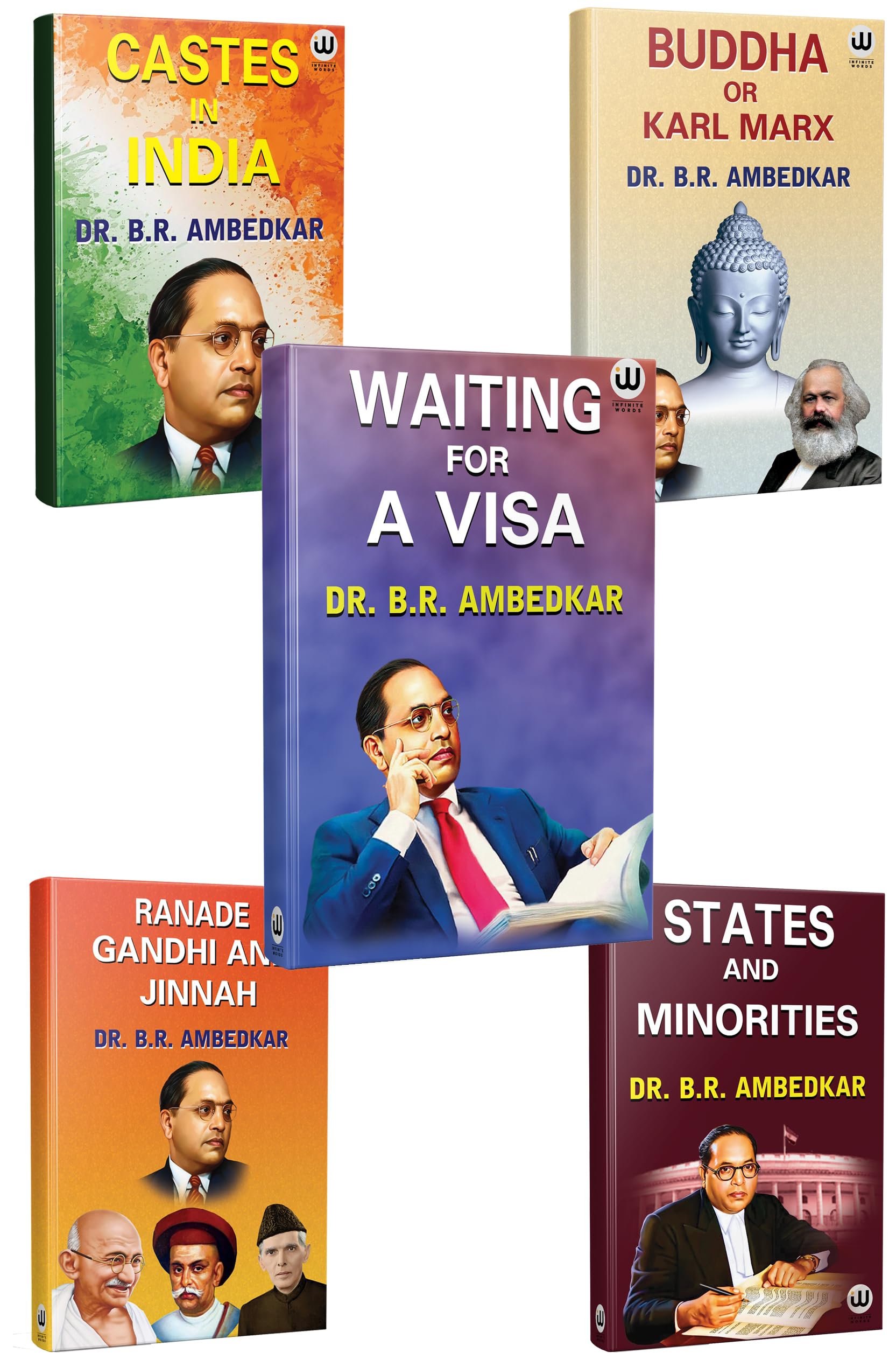
Castes In India | States and Minorities | Ranade, Gandhi and Jinnah | Waiting For A Visa | Buddha Or Karl Marx | Dr. BR Ambedkar Books | English ... photo frame statue मुस्लिम Lang Aani b. r.
Brand: Infinite Words
Product Overview
"In ‘Castes in India’ Ambedkar provides a pioneering analysis of the origin and development of caste in India. The chapter begins by defining what caste is and explaining its origins from Ambedkar’s perspective, as well as examining the role caste plays in the oppression of women. Ambedkar's causal explanation of women's oppression marks a departure from other significant political works of the time, including Gandhi’s, which largely neglect the oppression of women as a critical form of social inequality. Ambedkar’s ‘Castes in India’ serves as a vital corrective to the traditional canon in political philosophy due to the valuable insights it offers.Dr. Ambedkar's study of the caste problem involves :(1) in spite of the composite make-up of the Hindu population, there is a deep cultural unity;(2) caste is a parcelling into bits of a larger cultural unit;(3) there was one caste to start with and(4) classes have become castes through imitation and excommunication.""In 1947, Dr. B.R. Ambedkar submitted States and Minorities to the Sub-Committee on Fundamental Rights of the Constituent Assembly of India. As a member of this Sub-Committee, tasked with drafting the Fundamental Rights for the Constitution, Ambedkar created the document on behalf of the Scheduled Caste Federation, an organization he founded in the early 1940s, intending to propose safeguards for the Scheduled Castes.However, Ambedkar expanded the scope of his mandate. States and Minorities resembled a mini- constitution, featuring a Preamble and draft articles on “Fundamental Rights of Citizens” and “Admission of States into the Union.” It laid out a comprehensive constitutional framework aimed at protecting and empowering the Scheduled Castes. Notably, the document’s section on “Remedies against Invasion of Fundamental Rights” advocated for “State Socialism” and “Economic Democracy.”""The Deccan Sabha of Poona invited me to deliver an address on the 101st birthday of the late Justice Mahadev Govind Ranade, celebrated on January 18, 1943. Though initially hesitant, I accepted the invitation despite knowing my views on social and political issues might not be well-received.I had no intention of publishing the address as such speeches often have little lasting value. However, persistent friends insisted on its publication, believing it should not be forgotten. Thus, the printed address differs slightly from the delivered one due to time constraints and paper shortages.The publication's circumstances are unusual, with reviews harshly criticizing the address even before its release. This is mainly an issue for the publishers, but it also underscores the address's lasting value. My criticism of Mr. Gandhi and Mr. Jinnah, which some interpret as hatred, has been particularly controversial. However, my critiques are rooted in a desire for political settlement and justice, not personal animosity.The Congress Press, which consistently misrepresents and criticizes me, is the primary source of condemnation. I believe this animosity reflects broader societal prejudices. Nonetheless, I remain committed to my duties, prioritizing India's well-being over idolization of any individual. True nationalism requires recognizing that the country is greater than any single person.- Dr. B. R. Ambedkar""‘Waiting for a Visa’ by Dr. B. R. Ambedkar is a brief autobiographical account written in 1935-36. It illuminates the pervasive caste-based discrimination faced by the Dalit community. The title metaphorically suggests the Dalits' ongoing struggle for acceptance and dignity in Indian society.Key ChaptersChildhood Experiences : Ambedkar recalls being denied help during his childhood travels due to his ‘untouchable’ status, leaving lasting trauma.Academic Discrimination : Despite his advanced degrees, Ambedkar was refused accommodation and faced profound disrespect upon returning to India.Transport Refusal : Hindu tongawallas refused to transport Ambedkar, highlighting dangerous, deep- rooted intolerance.Superstition of Impurity : Casteism perpetuates beliefs in impurity and contamination, contrary to religious teachings on compassion.Medical Negligence : A Dalit woman died in childbirth as a doctor refused care, showcasing deadly caste-based discrimination in healthcare.Professional Disrespect : A Bhangi boy, despite his post as a scribe, faced disrespect due to his caste, forcing him to leave his job.Historical Context : Discrimination against Shudras and untouchables has deep historical roots, with Ambedkar’s activism aiming to combat these injustices.""‘Buddha or Karl Marx,’ written by Dr. B. R. Ambedkar, explores a comparative study of the ideas proposed by Gautama, the Buddha and Karl Marx. The text was first published in 1987 as part of Dr. Babasaheb Ambedkar's Writings and Speeches, Vol. 3, and later reprinted by the Dr. Ambedkar Foundation in 2014.Here are some key points from the essay:1. Dr. Ambedkar attempts to investigate the failings